


'A Streatley Round'

New member Imogen Haig shares a delightful Streatley walk.
One of my favourite walks is a circular one, with several opportunities to change its length according to the weather, time, and a packed lunch. It starts at the Ridgeway National Trail car park, Rectory Road, Streatley, where the flinty chalk downland ends and the tarmac road begins.
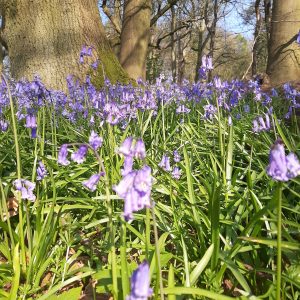
Walking east on Britain’s oldest road, along a valley floor with Thurle Down on your left, it’s easy to imagine the drovers, herds folk and other travellers who have previously trodden this ancient route. After around a mile, by some houses, a signpost directs you sharp right on to a short narrow path which suddenly opens into the expanse of the local golf course. As the footpath ascends to the top of the hill, the views are glorious when you stop to ring the bell to alert golfers to your presence. In spring there are banks covered with primroses, and in summer with ox-eye daisies. Crossing through the National Trust car park for The Holies, Lardon Chase and Lough Down, and over the busy road, you come into the calm of The Holies, deeply wooded on one side, with open chalk grassland on the other. Following the deep dip and gate, a diagonal path on your right takes you into the spring bluebells of Common Wood, otherwise continue on into the open, keeping the woods on the left. One can scarcely believe this whole area was once used for motorbike scrambling.
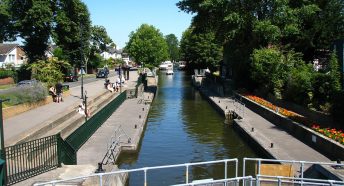
Eventually you reach and go through a gate ahead to keep going down a gently curving wide track, until you hear and see the fast Streatley to Pangbourne main road. The field corner on the left takes you on to a path that runs alongside the busy road, carpeted with beech leaves in the autumn. At its end, cross the road and take a right down into an enclosed path, soft underfoot and into a hidden part of the village. Eventually you come out on the Ridgeway trail again, by the bridge over the River Thames that links Streatley with the Oxfordshire village of Goring on Thames and Goring Lock. An ideal spot with many places to take refreshment, and contemplate the many travellers who have crossed here, where three ancient trade routes meet.
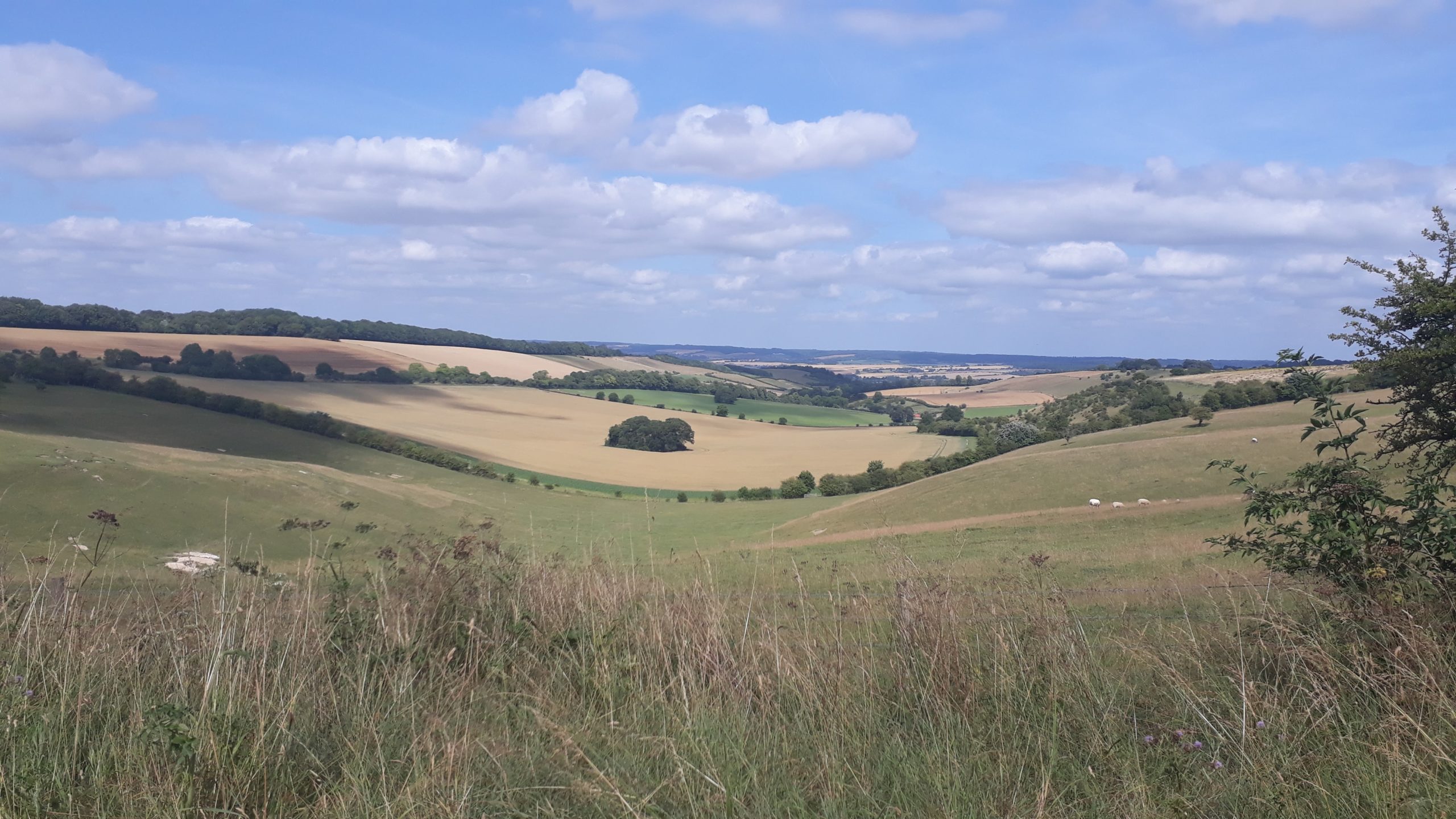
Turning left it’s time to head up Streatley High Street, crossing over at The Bull pub, featured in ‘Three Men and a Boat’ and where Isambard Kingdom Brunel held planning meetings for the new railway, before continuing up Streatley Hill, turning right on to a track by the old school house, to come to the foot of Lardon Chase. It’s then a steep, lung-busting ascent to the top, all forgiven when one turns and the expansive sweep of the Goring Gap is before you as you stand at the edge of the North Wessex AONB on chalk downland, and look down at the Thames and across to the Chilterns AONB.
All that’s now left is the descending grassy path between the distinctive grass tussocks of Lough Down behind, until you reach the tarmacked Ridgeway and turn left to walk back to the car park from where you began, passing grazing livestock in adjacent fields and wildlife rich hedgerows, mulling over one’s journey through a living, joyous, and ancient landscape.