


New homes in Green Belt must be sustainable and affordable, says CPRE
Any housing development in the Green Belt should comprise affordable or social rented homes, should be environmentally sustainable and carbon-neutral, and should bring measurable improvements to biodiversity, local nature recovery and conservation. That is the view of local countryside campaigners in Windsor and Maidenhead.
This statement by the Berkshire Branch of the Campaign to Protect Rural England (CPRE) follows the decision by the planning committee of the Royal Borough of Windsor & Maidenhead (RBWM) to grant outline permission to Cala Homes to build new homes on Green Belt land at Maidenhead Golf Club.
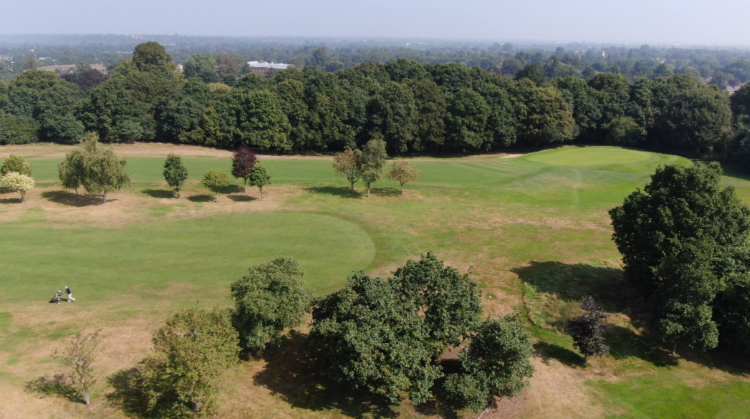
Under the Cala Homes plan, an area totalling 132 acres of the golf course, which is owned by RBWM, has been earmarked for housebuilding. Around 40% of the golf course is woodland, including five acres of ancient woodland at Rushington Copse. This woodland provides important habitat for protected wildlife species. The land has not yet been sold to Cala Homes and there is concern that other options have not been fully explored.
CPRE Berkshire expressed disappointment at last week’s decision by the Council planning committee, and pointed out that the golf course had only recently been declared an Asset of Community Value (ACLV) meaning that the land should not be sold without first giving the local community the option to buy it. CPRE has supported the Maidenhead Great Park campaign group of local residents who secured the ACV designation for the golf course.
Due to the ACV accreditation, granted in November 2024, it was expected that there would be opportunities for local community groups to bid for the land and put forward their own proposals. However, the Cala Homes scheme approved on 13 February is for a substantial development of 1,500 houses, in effect a New Town, covering much of the current golf course.
CPRE believes that any development of the land at Maidenhead golf course should be on an appropriate scale and be designed to fit the character of the local area. It says that new homes should meet Net Zero targets by incorporating rooftop solar panels making them energy self-sufficient, and the development should retain plenty of green space for the sake of wildlife conservation and for people’s health and wellbeing.
CPRE Berkshire works to protect, promote and enhance the countryside and green spaces of the Royal County. Both the national charity and the Berkshire Branch were formed in 1926 and will be celebrating their centenary next year. His Majesty The King is the Patron of CPRE. For more information on CPRE’s work please visit www.cpreberkshire.org.uk