Customize Consent Preferences

We use cookies to help you navigate efficiently and perform certain functions. You will find detailed information about all cookies under each consent category below.

The cookies that are categorized as "Necessary" are stored on your browser as they are essential for enabling the basic functionalities of the site. ... 

Always Active

Necessary cookies are required to enable the basic features of this site, such as providing secure log-in or adjusting your consent preferences. These cookies do not store any personally identifiable data.

Functional cookies help perform certain functionalities like sharing the content of the website on social media platforms, collecting feedback, and other third-party features.

No cookies to display.

Analytical cookies are used to understand how visitors interact with the website. These cookies help provide information on metrics such as the number of visitors, bounce rate, traffic source, etc.

Performance cookies are used to understand and analyze the key performance indexes of the website which helps in delivering a better user experience for the visitors.

No cookies to display.

Advertisement cookies are used to provide visitors with customized advertisements based on the pages you visited previously and to analyze the effectiveness of the ad campaigns.

Skip to content
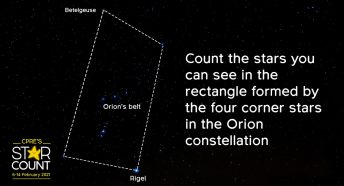
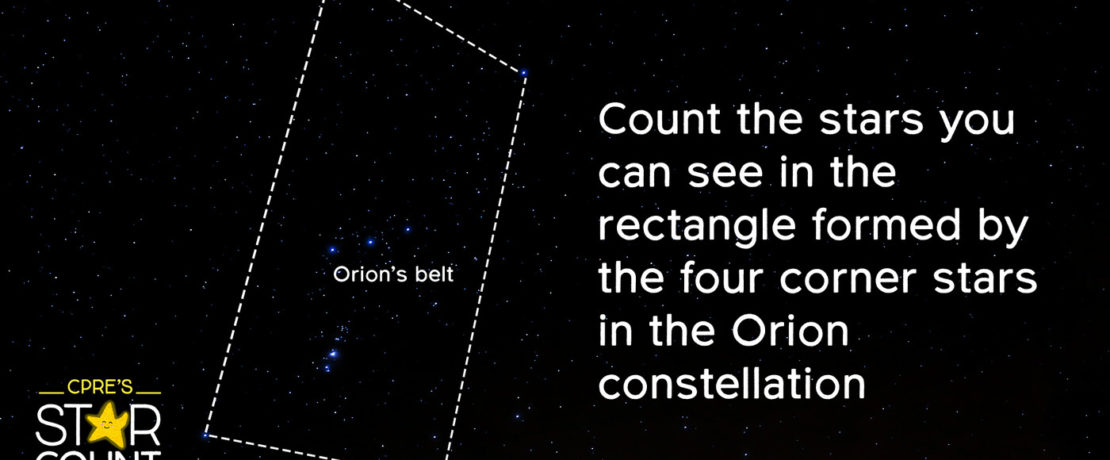
Image of Orion the Hunter constellation in the sky, with instructions on how to count the stars within Orion's four corner stars

A friendly stargazing activity for all

Image of Orion the Hunter constellation in the sky, with instructions on how to count the stars within Orion's four corner stars
Imogen Haig
By Imogen Haig
24 February 2022

Let’s get counting! Between Saturday 26 February and Sunday 6 March, take part in CPRE’s Star Count. With your help, we can map our view of the night sky.

A star-filled sky is one of the most magical sights you can see in our countryside and the stars have inspired art and culture for thousands of years. But too often, light pollution means that many of us can’t see the stars, especially if we live in or near a big town or city.

Just 5% of people in the UK experience ‘truly dark skies’.

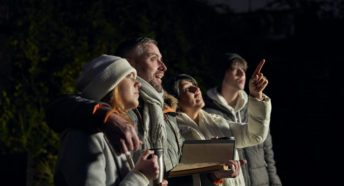
That’s why we’re counting the stars. Join in by choosing a clear night between Saturday 26 February – Sunday 6 March and counting the number of stars you can see within the constellation of Orion. It’s easy to do, and you don’t need a telescope or any equipment.
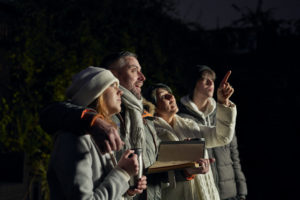
Credit: Kerry Harrison
Why take part

Your results will help CPRE create an interactive map of the nation’s view of the night sky, and where light pollution is at its worst, so local councils can take action. It’s a family-friendly activity that’s quick and easy to do and can help more of us experience the beauty of a starry sky

How to take part
  1. Turn off the lights at home, then pop outside
  2. Look south in the night sky to find Orion
  3. Wait about 20 minutes to let your eyes adjust to the dark
  4. Count the stars you can see in the rectangle formed by the four corner stars in the Orion constellation
  5. Submit your results on CPRE’s website

Remember to wear plenty of layers so you’re warm and toasty, and have a notebook and pen or pencil ready to note down how many stars you can spot. So go on, give turning down the lights to turn up the stars a go, to see what you can see.